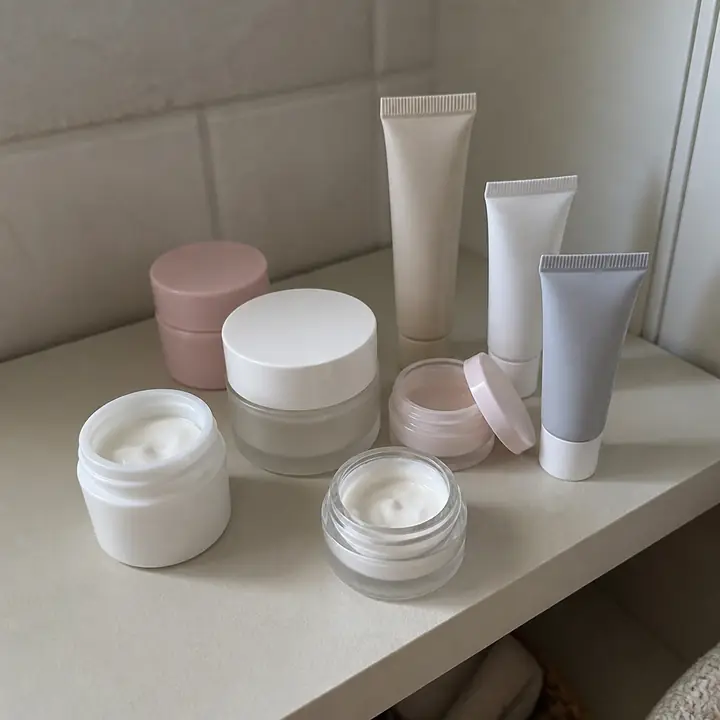
The cynical position is that eye cream is face cream in a smaller jar at four times the price. The industry position is that the eye area is uniquely delicate and requires dedicated formulation.
Both are partly right, and the interesting question is which parts.
What's genuinely different about the eye area
The skin under the eye really is different, not just marketing-different. It is roughly a quarter the thickness of cheek skin. It has very few oil glands, so it dries out faster and holds product differently. It moves constantly — somewhere around fifteen thousand blinks a day. And it is more prone to irritation and to milia, those small hard white bumps that dense formulations can encourage.
So there is a real case for a formulation that is lighter, less occlusive, and free of the fragrances and strong actives that a face cream might carry.
What that does not justify is a fourfold price increase for fifteen millilitres.
Ingredients with genuine support
Retinoids — the strongest evidence
Best-supported active for improving skin thickness and quality anywhere on the face, including here. Increases collagen production over months. The catch is tolerability: this skin irritates easily, and irritation in this area can trigger pigmentation, making things worse before better.
Start twice a week, buffer with moisturiser, and expect twelve weeks before judging.
Adenosine
Underrated, and one of the few ingredients in this space with a formal regulatory history — it has been an approved anti-wrinkle functional ingredient in South Korea since 2009, which required a real evidence dossier. Works on cellular energy and collagen signalling. Well tolerated, which matters here.
Peptides
A broad category doing very different things, which makes blanket statements useless. Signal peptides that encourage collagen production have reasonable support. Neuropeptides marketed as "topical Botox" have far less. The evidence is genuinely mixed and the marketing is uniformly confident.
Vitamin C
Helps with pigmented circles specifically, plus antioxidant protection. Stability is the practical problem — an oxidised serum, visibly yellow-brown, is inert. Packaging matters more than brand here.
Caffeine
Real, immediate, and temporary. Constricts blood vessels and reduces puffiness for a few hours. Genuinely useful before a wedding. Not a treatment for anything.
Hyaluronic acid
Hydrates, which plumps fine lines temporarily and makes the area look smoother. The effect is real and entirely superficial — it stops when you stop. Nothing wrong with that as long as you know what you bought.
What no eye cream can do
This is the honest boundary.
Fill a structural hollow. If the darkness is a shadow cast by volume loss, a topical cannot replace the volume. It can improve the skin over the hollow. It cannot remove the hollow.
Remove deep, established creases. Lines that are visible when your face is completely still are folds in the structure, not surface dryness. Creams soften their appearance; they don't erase them.
Work in a week. Anything that visibly changes in seven days changed hydration or light reflection. Real change in skin quality is an eight-to-twelve week proposition minimum.
So is the smaller jar worth it?
Our honest position, in order:
- If your face moisturiser is fragrance-free and non-irritating, use it around your eyes. For basic hydration, a dedicated product is usually unnecessary.
- Buy a dedicated product when you want a specific active in a form tolerable for this skin — a gentle retinoid, adenosine, a well-formulated vitamin C. That is a real reason.
- Judge by cost per use, not sticker price. A 30 ml product at $60 is cheaper per application than a 10 ml at $35, and the eye area needs very little per use.
- Ignore price as a quality signal. It correlates with packaging and marketing budget far more reliably than with formulation.
The short version: eye creams work modestly, on skin quality, over months. They do not fill hollows or erase established lines. Buy one for a specific active, not because the aisle says you need one — and work out what type of dark circle you have before you choose.